

The Corporate Relocation Playbook

Atlas Blog & News

A family walks through an airport terminal, each carrying luggage and looking at the departure signs.

Managing Employee Relocations Across Canada, the United States and International Destinations

What was once viewed primarily as arranging transportation for household goods has evolved into a coordinated business process involving logistics, employee experience, risk management, compliance, communication and family support. Today’s relocation programs must balance organizational priorities with the personal realities employees face when moving their lives, careers and families.


Executive Summary

Relocating an employee has never been more complex.


Whether relocating an employee across a province, to another region of North America or overseas, the fundamentals remain the same: thoughtful planning, expert coordination and consistent execution. A missed deadline, communication breakdown or incomplete plan can delay productivity, increase costs and negatively impact both the employee experience and business operations.


Successful relocations don’t happen because a truck arrives on time.


They happen because every step before, during and after moving day has been carefully planned.


Drawing on more than six decades of relocation experience, Atlas Van Lines Canada has developed this playbook to help organizations better understand today’s relocation landscape, reduce risk and create a smoother transition for every employee they move.


Relocation Has Changed

 

A woman sits on a couch, using a laptop while holding a pen, focused on her work.


For many years, relocation success was measured by a simple question.


Did the shipment arrive safely?

Today, that’s only one part of the equation.


Organizations are competing for talent in an increasingly mobile workforce. Employees expect transparency, proactive communication and a relocation experience that minimizes disruption for themselves and their families. HR and mobility professionals are expected to deliver all of this while managing budgets, timelines, compliance requirements and multiple stakeholders.


Today, a successful relocation means:


  • Employees become productive sooner.
  • Families transition with confidence.
  • Business disruption is minimized.
  • Costs remain predictable.
  • Risks are proactively managed.
  • Every stakeholder understands what happens next.

Relocation is no longer simply transportation.


It is a coordinated mobility and logistics strategy that directly supports talent acquisition, retention and business continuity.


Modern Mobility Requires More Than One Moving Solution

As employee relocations become more complex, organizations are looking beyond traditional transportation models to improve flexibility, employee experience and overall program performance.


Containerized transportation isn’t intended to replace traditional household goods moving. Instead, it provides another strategic option when timing, scheduling, temporary storage or shipment handling become critical considerations.


The strongest mobility programs don’t rely on a single transportation method. They choose the approach that best supports the employee, the assignment and the organization’s objectives.


Whether that’s a traditional van line move, containerized transportation or a hybrid solution, flexibility creates better outcomes.


Local Expertise. National Strength.

One of the greatest misconceptions about relocation is that it begins when the moving truck arrives.


In reality, that moment represents weeks—or even months—of planning and coordination.


Every successful relocation depends on experienced professionals working together across multiple disciplines to deliver one seamless experience for the employee.

Atlas Van Lines Canada moving professionals

At Atlas Van Lines Canada, that coordination is supported by our Trusted Agent Network—carefully selected moving professionals located across Canada who combine local knowledge with national resources and consistent service standards.
Employees benefit from personalized service delivered by people who understand their local communities, while organizations benefit from the strength and reliability of one connected network.
Local expertise.
National strength.

The Modern Relocation Ecosystem

Many organizations underestimate how many moving parts exist behind a successful relocation.


A typical employee relocation may involve:


  • HR and Global Mobility teams
  • Corporate relocation policy administrators
  • Household goods specialists
  • Professional moving crews
  • Warehousing and storage providers
  • Vehicle transportation partners
  • Pet relocation specialists
  • Destination service providers
  • Local service partners

While the employee may only see one moving truck, dozens of professionals are coordinating schedules, transportation, communication and logistics to ensure every aspect of the move comes together successfully.


The strongest relocation partners don’t simply transport belongings.


They coordinate the entire relocation journey.


Understanding Three Types of Employee Relocation

 

A collection of Atlas cardboard boxes and miscellaneous items arranged together on a flat surface.


Although every relocation is unique, most corporate moves fall into one of three categories.

Domestic Relocation
Domestic relocations require careful coordination around scheduling, access, transportation, storage, seasonal considerations and employee communication.
Typical planning considerations include:
  • Possession dates
  • Temporary storage
  • Long-distance transportation
  • Building access
  • Family scheduling
  • School transitions

North American Relocation
Relocations between Canada and the United States introduce additional planning requirements to help ensure documentation, border requirements and transportation are properly coordinated.
While the underlying objective remains the same—a seamless employee experience—the planning process requires additional attention to documentation, scheduling and logistics.
Because of its complexity, North American employee mobility is explored in greater detail in Atlas Mobility Insights – Volume 2: The Anatomy of a Successful Cross-Border Relocation.

International Relocation
International assignments involve the greatest degree of coordination and long-range planning.
Organizations may need to consider:
  • International transportation
  • Destination regulations
  • Temporary accommodation
  • Extended transit times
  • Cultural considerations
  • International logistics partners
While every destination is unique, successful international relocations share one characteristic: they begin with thoughtful planning.

Why Relocations Experience Delays

When people think about moving challenges, they often picture damaged furniture or severe weather.


In reality, most delays occur long before moving day.


Common causes include:


  • Incomplete household inventories
  • Last-minute scheduling changes
  • Delayed property closings
  • Temporary housing availability
  • Capacity constraints during peak season
  • Misaligned expectations
  • Poor communication
  • Inadequate planning timelines

These challenges are rarely unavoidable.


Most are preventable through early planning and coordinated project management.


Successful relocations begin with planning—not packing.


The Atlas Relocation Readiness Framework

Every successful relocation follows a process.


After supporting thousands of employee relocations, Atlas has developed a structured framework that helps organizations prepare employees, reduce uncertainty and improve relocation outcomes.


Rather than viewing relocation as a series of isolated tasks, the Atlas Relocation Readiness Framework provides a repeatable methodology that organizations can apply to every employee move—whether across the province, across North America or internationally.

Phase One
Strategic Planning
Establish the foundation.
  • Confirm relocation objectives.
  • Establish timelines.
  • Review relocation policies.
  • Define budgets and approvals.
  • Identify potential risks.
  • Understand family requirements.

Phase Two
Employee Readiness
Prepare employees with confidence.
  • Professional household survey
  • Inventory review
  • Vehicle planning
  • Temporary accommodation planning
  • Employee communication
  • Specialized relocation requirements
For employees relocating with pets, Atlas Canada’s Paws en route program recognizes that pets are family members. Planning ahead helps reduce stress for both employees and their companions while supporting a smoother relocation experience.

Phase Three
Operational Planning
Transform strategy into an executable relocation plan.
Activities include:
  • Transportation planning
  • Storage coordination
  • Delivery scheduling
  • Shipment visibility
  • Communication planning
  • Contingency planning

Phase Four
Execution
Coordinate every stage of the relocation.
Atlas Canada’s Trusted Agent Network plays a central role during execution, combining local expertise with national coordination to deliver consistent service standards from origin through destination.

Phase Five
Arrival & Transition
A successful move doesn’t end with delivery.
Organizations that invest in the arrival experience help employees become productive sooner while improving overall relocation satisfaction.
Best practices include:
  • Delivery confirmation
  • Employee follow-up
  • Issue resolution
  • Continuous improvement
  • Experience measurement
Because successful relocations aren’t measured by delivery dates alone.
They’re measured by successful transitions.

Relocation Is About More Than Moving


A man and woman sit together on a couch, with a dog resting comfortably between them.


Every relocation represents an important milestone.


A family beginning a new chapter.

A professional accepting a new opportunity.

An organization investing in talent.


At Atlas Van Lines Canada, we believe every relocation has the opportunity to create a positive impact beyond the move itself.


That philosophy is reflected in Every Move Matters, an initiative supporting Tree Canada and Food Banks Canada while reinforcing our commitment to strengthening the communities we serve.


Because while logistics move belongings…


Thoughtful planning moves people forward.


Atlas Resource Spotlight

Relocation planning doesn’t end with this guide.


Atlas offers a growing collection of practical resources designed to help HR professionals and employees navigate every stage of the relocation journey.


Explore:


Together, these resources provide organizations and employees with practical guidance before, during and after every move.


Summary

Corporate relocation has evolved.


Today, it is a strategic business function that supports talent acquisition, employee experience and organizational growth.


The organizations that consistently deliver successful relocations understand that moving people is about far more than transporting household goods. It requires experienced professionals, coordinated planning, trusted partnerships and a repeatable process that reduces uncertainty while supporting employees through one of life’s biggest transitions.


That is the philosophy behind the Atlas Relocation Readiness Framework.


It is also the foundation of how Atlas Van Lines Canada approaches every relocation—with Local Expertise. National Strength. And a Trusted Agent Network committed to delivering exceptional experiences wherever the journey begins.


Whether moving across the province, across North America or around the world, successful relocations don’t happen by accident.


They happen by design.
The Anatomy of a Successful Cross-Border Relocation

Atlas Blog & News

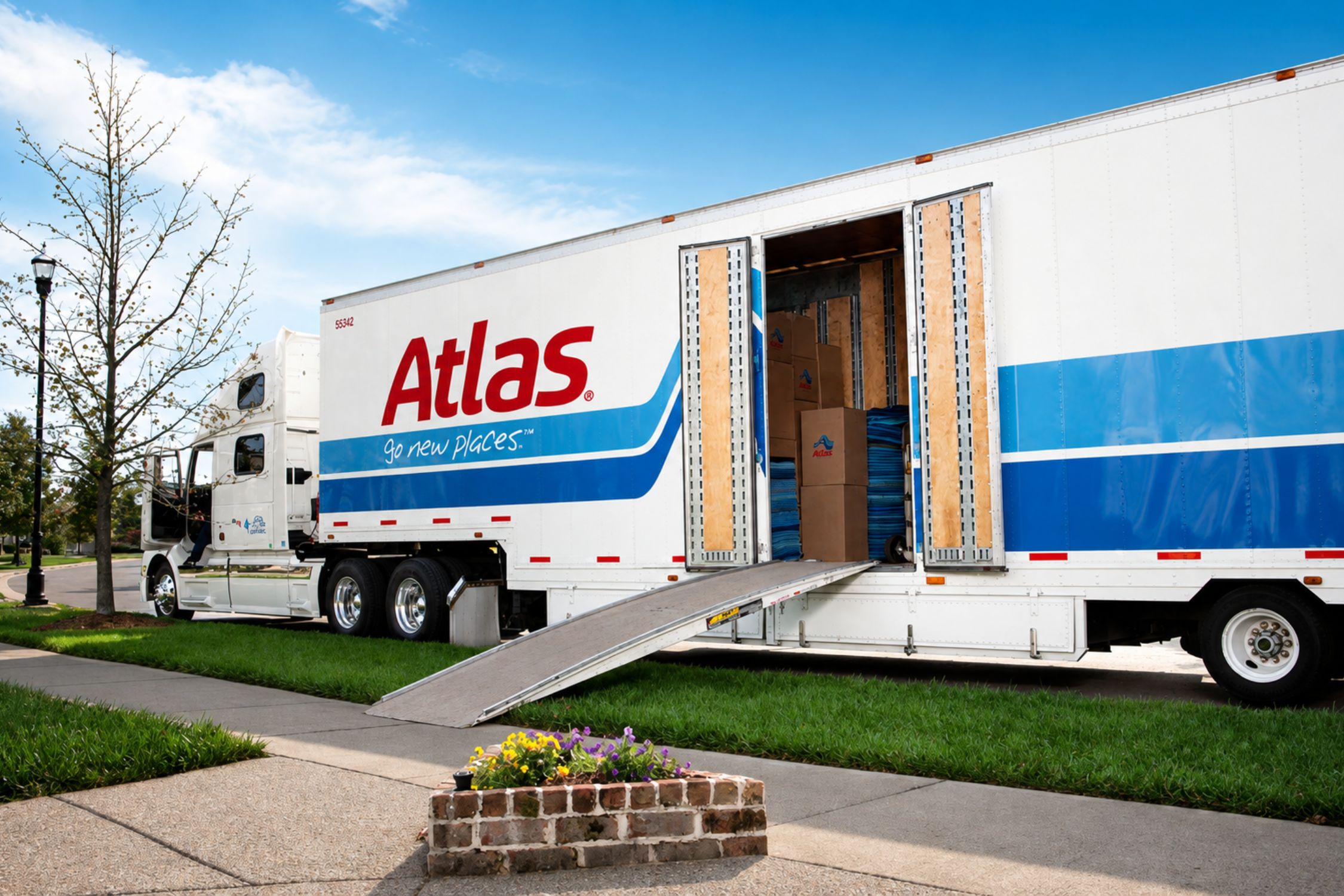
Atlas truck parked on a road, showcasing its vibrant color scheme.

What Every HR and Global Mobility Professional Should Know Before Moving an Employee Between Canada and the United States

Helping HR and global mobility professionals understand what makes cross-border moves successful and why integrated planning matters more than ever. As employee mobility becomes increasingly complex, organizations need a coordinated approach that brings together people, processes, and logistics to create a smoother experience for both employees and their families. This article explores the key considerations for planning successful cross-border moves and the value of taking a more integrated approach.


Executive Summary

Relocating an employee across the Canada–U.S. border isn’t simply a move—it’s a carefully coordinated logistics operation involving transportation, customs compliance, regulatory requirements, employee experience, and business continuity.


While employees often see a moving truck arriving at their home, successful cross-border relocations depend on dozens of professionals working together behind the scenes. Household goods must be accurately inventoried, documentation prepared, customs requirements satisfied, transportation coordinated across two countries, and communication maintained among employees, employers and service providers to support both the employee’s personal transition and the organization’s business objectives.


The best relocations feel effortless because every detail has been planned.


Drawing on decades of experience supporting corporate, government and private relocations throughout North America, Atlas Van Lines Canada has developed this guide to help HR professionals, mobility teams, and relocation decision-makers better understand what makes cross-border moves successful—and why integrated planning matters more than ever.


Cross-Border Mobility Is Changing

  1. Organizations are recruiting talent wherever the right people can be found.
  2. Assignments are increasingly international.
  3. Hybrid work has expanded hiring markets.
  4. Employees expect greater flexibility.
  5. At the same time, border regulations, documentation requirements and employee expectations continue to evolve.
  6. Today’s mobility programs are expected to deliver more than transportation.
  7. They are expected to provide certainty.
  8. That requires more than a moving company.
  9. It requires a coordinated relocation network.

Meet Sarah


Let’s follow one relocation:


Sarah has accepted a leadership position with her organization. She currently lives in Toronto. In eight weeks, she will begin work in Dallas.


She’ll relocate with:

  • Her spouse
  • Two children
  • A Labrador Retriever
  • Two vehicles
  • Approximately 10,000 pounds of household goods

Her employer has one goal. Have Sarah ready to begin work. Everything else must happen around that objective.


The Employee Sees One Move

Behind the scenes, Atlas sees dozens of interconnected activities.


While Sarah is preparing for a new opportunity, experienced relocation professionals are simultaneously coordinating every aspect of the move—from planning and documentation to transportation, real estate, communication and final delivery.


This may include:

  • Household goods surveys
  • Packing requirements
  • Origin real estate coordination
  • Destination real estate coordination
  • Customs documentation
  • Transportation scheduling
  • Border compliance
  • Vehicle logistics
  • Pet relocation
  • Storage requirements
  • Delivery scheduling
  • Communication between all stakeholders

Every decision affects another. Clear, proactive communication between employees, employers and service providers helps manage expectations, minimize disruption and keep the relocation on track.


Relocation is no longer transportation.


It is supply chain management for people.


The Power of an Integrated North American Network


This is where successful corporate cross-border relocations differ from domestic moves.


A relocation doesn’t stop at the border.


It changes networks.


Atlas Van Lines Canada is part of Atlas World Group, one of North America’s largest relocation and logistics organizations. Through this relationship, Canadian customers benefit from an integrated network of relocation professionals, knowledgeable and experienced service providers, transportation specialists and destination partners across Canada, the United States and around the world.


For organizations managing employee mobility, this means fewer handoffs, better communication, experienced service providers and greater continuity throughout the relocation process.


Instead of coordinating multiple independent providers, HR teams benefit from a connected North American network working toward a common objective: delivering a seamless employee experience from origin to destination.


Behind Every Cross-Border Relocation

A successful Canada–U.S. relocation may involve:

Employee
Employer
HR / Global Mobility
Atlas Van Lines Canada
Origin Atlas Agent
Driver / Transportation Team
Atlas World Group
U.S. Customs and Border Protection
Destination Atlas Agent
Final Delivery
Employee Follow-up


Multiple teams. Two countries. One relocation experience. The employee should never have to think about how these parties work together. That’s exactly the point.


Planning Starts Long Before Packing


One of the most valuable planning tools is the household survey.


Today’s AI-powered virtual surveys allow relocation specialists to create accurate household inventories remotely, improving planning while making the experience more convenient for employees. Atlas uses this technology to improve estimate accuracy, transportation planning and logistics coordination.


Accurate inventories support:

  • Transportation planning
  • Customs documentation
  • Carrier liability review
  • Capacity planning
  • Specialized packing
  • Scheduling

An incomplete inventory creates risk long before moving day.


Customs Is About Preparation, Not Paperwork

Most border delays do not occur because the customs process is inherently difficult. They occur when documentation is incomplete, information is inconsistent or requirements have not been confirmed before the shipment reaches the border.


For household goods that qualify for free entry into the United States, the employee is typically required to complete the applicable customs declaration and supporting documentation, including U.S. Customs and Border Protection Form 3299 where appropriate.


Professional planning may include:

  • Accurate household-goods inventories
  • Completed customs documentation
  • Confirmation of the employee’s entry and residency status
  • Shipment and border-crossing coordination
  • Vehicle documentation
  • Review of restricted or prohibited items
  • Identification of goods that may require special handling
  • Customer education and border-crossing guidance
  • Clear communication between the employee, employer and Atlas teams

Atlas’s experienced cross-border teams work directly with employees to explain the process, prepare the required documentation and help ensure their household goods move smoothly across the Canada–U.S. border. Good planning and clear communication help reduce delays and create a better relocation experience.


Good customs planning is ideally invisible, while poor planning can cause delays.


Every Family Relocates Differently


  1. No two employee relocations are the same.
  2. Every move presents unique circumstances that require thoughtful planning, experienced coordination and nimble solutions.
  3. Some involve executives.
  4. Others involve military families.
  5. Some require temporary storage.
  6. Others include multiple vehicles or valuable collections.
  7. Increasingly, employees are relocating with pets.

Atlas Canada’s Paws en route program recognizes that pets are family members. By providing planning resources and guidance, Atlas helps employees prepare for veterinary requirements, transportation considerations and a smoother transition for every member of the household.


Because successful relocations support families—not just shipments.


The Last Mile Is the Human One


  1. Transportation ends with delivery.
  2. Relocation continues long afterward.
  3. Employees are learning a new city.
  4. Children are adjusting to new schools.
  5. Families are establishing new routines.
  6. Organizations often underestimate how much these final days influence the employee’s overall relocation experience.
  7. A successful relocation is measured not by when the truck leaves.
  8. It is measured by how quickly the employee feels at home.

The Atlas Cross-Border Readiness Framework

The most successful relocations follow a repeatable planning process.

Stage 1
Strategic Planning
  • Assignment confirmed
  • Timeline established
  • Budget approved
  • Policy reviewed

Stage 2
Employee Readiness
  • Household survey completed
  • Family requirements reviewed
  • Vehicle transportation planned
  • Pet relocation confirmed
  • Temporary accommodation arranged

Stage 3
Compliance
  • Customer is prepared for border requirements
  • Inventories finalized
  • Carrier liability reviewed
  • Border requirements confirmed

Stage 4
Logistics Coordination
  • Packing scheduled
  • Transportation confirmed
  • Border-crossing process confirmed
  • Shipment visibility confirmed

Stage 5
Arrival
  • Delivery completed
  • Employee settled
  • Follow-up completed
  • Feedback captured


Moving More Than Household Goods


Every employee relocation represents a significant investment.

  • An investment in talent.
  • An investment in families.
  • An investment in business growth.

At Atlas, that perspective extends beyond transportation. Through Every Move Matters, Atlas supports initiatives with Tree Canada and Food Banks Canada, reflecting a belief that every relocation should leave a positive impact on the communities where people live and work.


Combined with a coast-to-coast Trusted Agent Network, specialized programs such as Paws en route, and the broader capabilities of Atlas World Group, Atlas brings together local expertise, national strength and North American reach to support every stage of the relocation journey.


Questions Every Organization Should Ask Before Selecting a Cross-Border Relocation Partner


Not all providers offer the same level of integration.


Before selecting a relocation partner, consider asking:


  • Who manages the relocation after it crosses the border?
  • Is there a coordinated North American network or multiple independent providers?
  • Will employees have a single point of contact throughout the move?
  • How is shipment visibility maintained?
  • How are delays communicated and managed?
  • What support is available after delivery?
  • How are pets, vehicles, storage and specialized services coordinated?
  • What experience does the provider have supporting corporate and government relocations?

The answers to these questions often determine whether a relocation feels fragmented—or seamless.


For organizations moving talent between Canada and the United States, success depends on more than transportation. It requires experienced people, trusted partnerships, coordinated logistics and a shared commitment to delivering an exceptional employee experience.


At Atlas Van Lines Canada, supported by the strength of Atlas World Group and our Trusted Agent Network, that’s what we deliver every day.


Resource Spotlight

Continue your planning with Atlas resources designed to support employees and HR teams throughout every stage of the relocation journey:


Atlas Van Lines Canada Renews Partnership with Tree Canada

Atlas Blog & News

Banner image for Tree Canada press release featuring trees and greenery

Atlas Van Lines Canada Renews Partnership with Tree Canada for 2026

Atlas Van Lines Canada is proud to continue its partnership with Tree Canada in 2026, reinforcing its commitment to environmental stewardship and sustainable business practices. As part of this initiative, Atlas Canada will plant one tree for every residential move booked in Canada throughout the year, contributing up to 5,000 trees to help restore forests, strengthen local ecosystems, and support a greener future. To further amplify the impact, the Government of Canada will match the number of trees planted through its 2 Billion Trees program – doubling the positive environmental contribution of every customer move to a total of 10,000 trees.


These trees will be planted in communities across the country, helping to sequester carbon, enhance biodiversity, and improve overall environmental health.


“At Atlas Canada, sustainability is about taking meaningful action,” said Fred Haladay, President & COO of Atlas Canada. “Every move represents an opportunity to give back to the communities we serve. Through our continued partnership with Tree Canada, we’re proud to help grow Canada’s tree canopy and make a lasting difference – one tree at a time.”


This program is brought to life through Atlas Canada’s nationwide network of trusted agents, who support customers throughout their relocation journeys. Together, Atlas and its agents are empowering customers to take part in environmental restoration simply by choosing Atlas for their move.


As Atlas Canada looks ahead, the company remains focused on advancing sustainable practices across its operations. The ongoing partnership with Tree Canada reflects Atlas Canada’s broader commitment to reducing its environmental footprint while contributing to healthier, more resilient communities for generations to come.


About Atlas Canada


Since 1963, Atlas Canada has been the nation’s leading provider of long-distance residential and corporate moving services. With a network of over 100 trusted agents across the country, Atlas offers safe, reliable relocation solutions tailored to customer needs. In addition to its moving expertise, Atlas Canada provides comprehensive logistics services, ensuring seamless supply chain management and specialized freight handling. For more information, visit www.atlasvanlines.ca.


About Tree Canada


Tree Canada is the only national non-profit organization dedicated to planting and nurturing trees in rural and urban environments in every province across the country. Since 1992, Tree Canada has worked to grow Canada’s tree canopy through greening programs, research, and community engagement. Together with partners, Tree Canada plants millions of trees each year to support resilient ecosystems and healthier, greener communities. For more information, visit www.treecanada.ca.


Atlas Canada Partners with Food Banks Canada to Support Families Across Canada

Atlas Blog & News

Family sharing a meal

Atlas Canada Joins Forces with Food Banks Canada to Support Families in Need

Oakville, ON — February 9, 2026


Atlas Van Lines Canada is proud to continue its partnership with Food Banks Canada, a national charitable organization dedicated to relieving hunger and strengthening food security across the country. In 2026, Atlas Canada remains committed to giving back and providing meals to families in need for every residential move booked in Canada.


This initiative reflects Atlas Canada’s ongoing commitment to making a meaningful difference in our community. Through this partnership, Atlas Canada supports food banks nationwide, helping ensure more people in Canada have access to nutritious food during challenging times.


“At Atlas Canada, we believe every move has the power to create positive change, not only by helping families relocate, but by strengthening the communities where we live and work,” said Fred Haladay, President & CEO of Atlas Canada. “Our continued collaboration with Food Banks Canada allows us to turn everyday moves into meaningful impact. Together, we’re helping provide essential support to families across Canada, one move at a time.”


“Food insecurity in Canada has reached a level we cannot ignore. With close to 2.2 million visits made to food banks this month alone, people across the country are facing pressures unlike anything we’ve seen before, and the need for strong, sustained support has never been greater,” shared Erin Filey-Wronecki, Chief Development & Partnerships Officer, Food Banks Canada. “Thanks to the continued commitment from Atlas Van Lines Canada, we can support those in communities across the country who need it most, working towards our vision of a Canada where no one goes hungry.”


Atlas Canada Proudly Serves as a Matching Partner for Food Banks Canada’s Family Day Campaign


From February 9–16, 2026, Atlas Canada is honoured to once again serve as a matching partner for Food Banks Canada’s Family Day Campaign. This campaign helps to amplify efforts and provide meals to families facing food insecurity. During this time, Atlas Canada will match the first $25,000 in Family Day donations—doubling the impact for communities in need. A gift of $42, when matched, can help feed a family of four for up to two weeks, providing vital support when it matters most.


This initiative offers an opportunity for Canadians to come together, demonstrate the power of community, and help ensure families across the country have access to the food they need.


Donate Now To Double Your Impact.


About Atlas Canada


Founded in 1963, Atlas Canada is a trusted leader in long-distance residential and corporate moving services nationwide. Supported by a network of more than 100 professional agents, Atlas delivers dependable, customized relocation solutions designed to meet evolving customer needs. Atlas Canada is also a key player in logistics and specialized freight handling, providing seamless supply chain support nationwide. Learn more at www.atlasvanlines.ca.


About Food Banks Canada


Food Banks Canada is the leader in addressing food insecurity in Canada.Our mission is to provide national leadership to relieve hunger today and prevent hunger tomorrow in collaboration with the food bank network from coast to coast to coast. For over 40 years, food banks have been dedicated to helping people living in Canada with food insecurity. Over 5,500 food banks and community organizations come together to serve our most vulnerable neighbours, who — this year — made close to 2.2 million visits to these organizations in one month alone, according to our HungerCount report. Since 2010, Food Banks Canada has shared over $1 billion in food supports and over $275 million in funding to help maximize collective impact and strengthen local capacity—while, backed by leading research, advocating for meaningful actions from governments to counter hunger and its root causes. Our vision is clear: to create a Canada where no one goes hungry. Visit foodbankscanada.ca to learn more.