 French
What Every HR and Global Mobility Professional Should Know Before Moving an Employee Between Canada and the United States
Helping HR and global mobility professionals understand what makes cross-border moves successful and why integrated planning matters more than ever. As employee mobility becomes increasingly complex, organizations need a coordinated approach that brings together people, processes, and logistics to create a smoother experience for both employees and their families. This article explores the key considerations for planning successful cross-border moves and the value of taking a more integrated approach.
Executive Summary
Relocating an employee across the Canada–U.S. border isn’t simply a move—it’s a carefully coordinated logistics operation involving transportation, customs compliance, regulatory requirements, employee experience, and business continuity.
While employees often see a moving truck arriving at their home, successful cross-border relocations depend on dozens of professionals working together behind the scenes. Household goods must be accurately inventoried, documentation prepared, customs requirements satisfied, transportation coordinated across two countries, and communication maintained among employees, employers and service providers to support both the employee’s personal transition and the organization’s business objectives.
The best relocations feel effortless because every detail has been planned.
Drawing on decades of experience supporting corporate, government and private relocations throughout North America, Atlas Van Lines Canada has developed this guide to help HR professionals, mobility teams, and relocation decision-makers better understand what makes cross-border moves successful—and why integrated planning matters more than ever.
Cross-Border Mobility Is Changing
- Organizations are recruiting talent wherever the right people can be found.
- Assignments are increasingly international.
- Hybrid work has expanded hiring markets.
- Employees expect greater flexibility.
- At the same time, border regulations, documentation requirements and employee expectations continue to evolve.
- Today’s mobility programs are expected to deliver more than transportation.
- They are expected to provide certainty.
- That requires more than a moving company.
- It requires a coordinated relocation network.
Meet Sarah
 Let’s follow one relocation:
Sarah has accepted a leadership position with her organization. She currently lives in Toronto. In eight weeks, she will begin work in Dallas.
She’ll relocate with:
- Her spouse
- Two children
- A Labrador Retriever
- Two vehicles
- Approximately 10,000 pounds of household goods
Her employer has one goal. Have Sarah ready to begin work. Everything else must happen around that objective.
The Employee Sees One Move
Behind the scenes, Atlas sees dozens of interconnected activities.
While Sarah is preparing for a new opportunity, experienced relocation professionals are simultaneously coordinating every aspect of the move—from planning and documentation to transportation, real estate, communication and final delivery.
This may include:
- Household goods surveys
- Packing requirements
- Origin real estate coordination
- Destination real estate coordination
- Customs documentation
- Transportation scheduling
- Border compliance
- Vehicle logistics
- Pet relocation
- Storage requirements
- Delivery scheduling
- Communication between all stakeholders
Every decision affects another. Clear, proactive communication between employees, employers and service providers helps manage expectations, minimize disruption and keep the relocation on track.
Relocation is no longer transportation.
It is supply chain management for people.
The Power of an Integrated North American Network

This is where successful corporate cross-border relocations differ from domestic moves.
A relocation doesn’t stop at the border.
It changes networks.
Atlas Van Lines Canada is part of Atlas World Group, one of North America’s largest relocation and logistics organizations. Through this relationship, Canadian customers benefit from an integrated network of relocation professionals, knowledgeable and experienced service providers, transportation specialists and destination partners across Canada, the United States and around the world.
For organizations managing employee mobility, this means fewer handoffs, better communication, experienced service providers and greater continuity throughout the relocation process.
Instead of coordinating multiple independent providers, HR teams benefit from a connected North American network working toward a common objective: delivering a seamless employee experience from origin to destination.
Behind Every Cross-Border Relocation
A successful Canada–U.S. relocation may involve:
Multiple teams. Two countries. One relocation experience. The employee should never have to think about how these parties work together. That’s exactly the point.
Planning Starts Long Before Packing
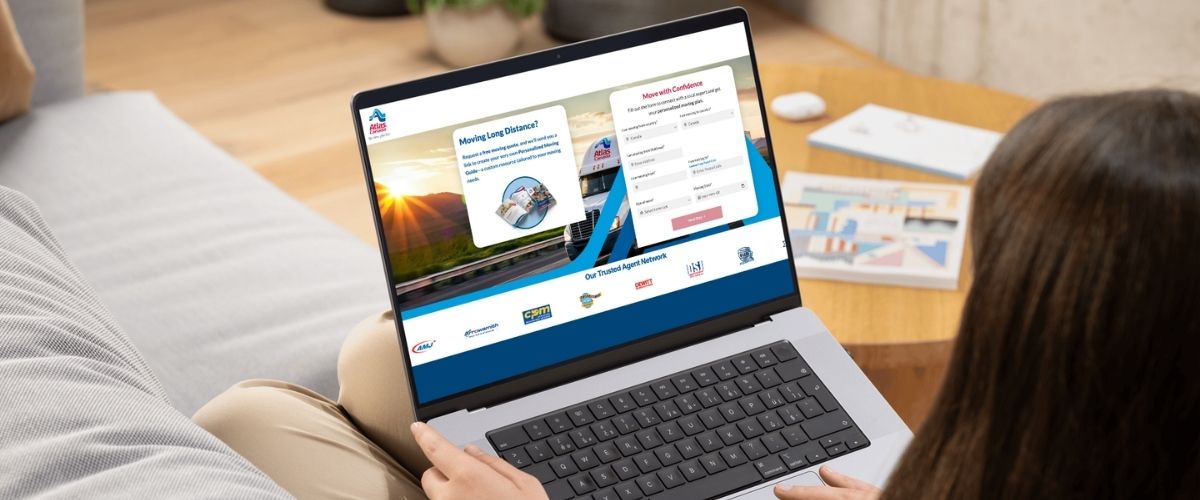
One of the most valuable planning tools is the household survey.
Today’s AI-powered virtual surveys allow relocation specialists to create accurate household inventories remotely, improving planning while making the experience more convenient for employees. Atlas uses this technology to improve estimate accuracy, transportation planning and logistics coordination.
Accurate inventories support:
- Transportation planning
- Customs documentation
- Carrier liability review
- Capacity planning
- Specialized packing
- Scheduling
An incomplete inventory creates risk long before moving day.
Customs Is About Preparation, Not Paperwork
Most border delays do not occur because the customs process is inherently difficult. They occur when documentation is incomplete, information is inconsistent or requirements have not been confirmed before the shipment reaches the border.
For household goods that qualify for free entry into the United States, the employee is typically required to complete the applicable customs declaration and supporting documentation, including U.S. Customs and Border Protection Form 3299 where appropriate.
Professional planning may include:
- Accurate household-goods inventories
- Completed customs documentation
- Confirmation of the employee’s entry and residency status
- Shipment and border-crossing coordination
- Vehicle documentation
- Review of restricted or prohibited items
- Identification of goods that may require special handling
- Customer education and border-crossing guidance
- Clear communication between the employee, employer and Atlas teams
Atlas’s experienced cross-border teams work directly with employees to explain the process, prepare the required documentation and help ensure their household goods move smoothly across the Canada–U.S. border. Good planning and clear communication help reduce delays and create a better relocation experience.
Good customs planning is ideally invisible, while poor planning can cause delays.
Every Family Relocates Differently

- No two employee relocations are the same.
- Every move presents unique circumstances that require thoughtful planning, experienced coordination and nimble solutions.
- Some involve executives.
- Others involve military families.
- Some require temporary storage.
- Others include multiple vehicles or valuable collections.
- Increasingly, employees are relocating with pets.
Atlas Canada’s Paws en route program recognizes that pets are family members. By providing planning resources and guidance, Atlas helps employees prepare for veterinary requirements, transportation considerations and a smoother transition for every member of the household.
Because successful relocations support families—not just shipments.
The Last Mile Is the Human One

- Transportation ends with delivery.
- Relocation continues long afterward.
- Employees are learning a new city.
- Children are adjusting to new schools.
- Families are establishing new routines.
- Organizations often underestimate how much these final days influence the employee’s overall relocation experience.
- A successful relocation is measured not by when the truck leaves.
- It is measured by how quickly the employee feels at home.
The Atlas Cross-Border Readiness Framework
The most successful relocations follow a repeatable planning process.
- Assignment confirmed
- Timeline established
- Budget approved
- Policy reviewed
- Household survey completed
- Family requirements reviewed
- Vehicle transportation planned
- Pet relocation confirmed
- Temporary accommodation arranged
- Customer is prepared for border requirements
- Inventories finalized
- Carrier liability reviewed
- Border requirements confirmed
- Packing scheduled
- Transportation confirmed
- Border-crossing process confirmed
- Shipment visibility confirmed
- Delivery completed
- Employee settled
- Follow-up completed
- Feedback captured
Moving More Than Household Goods

Every employee relocation represents a significant investment.
- An investment in talent.
- An investment in families.
- An investment in business growth.
At Atlas, that perspective extends beyond transportation. Through Every Move Matters, Atlas supports initiatives with Tree Canada and Food Banks Canada, reflecting a belief that every relocation should leave a positive impact on the communities where people live and work.
Combined with a coast-to-coast Trusted Agent Network, specialized programs such as Paws en route, and the broader capabilities of Atlas World Group, Atlas brings together local expertise, national strength and North American reach to support every stage of the relocation journey.
Questions Every Organization Should Ask Before Selecting a Cross-Border Relocation Partner

Not all providers offer the same level of integration.
Before selecting a relocation partner, consider asking:
- Who manages the relocation after it crosses the border?
- Is there a coordinated North American network or multiple independent providers?
- Will employees have a single point of contact throughout the move?
- How is shipment visibility maintained?
- How are delays communicated and managed?
- What support is available after delivery?
- How are pets, vehicles, storage and specialized services coordinated?
- What experience does the provider have supporting corporate and government relocations?
The answers to these questions often determine whether a relocation feels fragmented—or seamless.
For organizations moving talent between Canada and the United States, success depends on more than transportation. It requires experienced people, trusted partnerships, coordinated logistics and a shared commitment to delivering an exceptional employee experience.
At Atlas Van Lines Canada, supported by the strength of Atlas World Group and our Trusted Agent Network, that’s what we deliver every day.
Resource Spotlight
Continue your planning with Atlas resources designed to support employees and HR teams throughout every stage of the relocation journey:
- The Move Journey – a step-by-step guide from consultation to post-move support, supported by short educational videos.
- Destination City Guides – practical information to help employees settle into their new community.
- Paws en route – planning resources for employees relocating with pets.
- Moving Checklists & Planning Timelines – practical tools to keep relocations on track.
- Trusted Agent Network – local expertise backed by one of Canada’s most experienced long-distance moving networks.